
The Creativity Crisis: How Art Can Save Us in the Age of Overload and Doomscrolling
Thoughts from an art psychotherapist regarding our current social media landscape, algorithms hooked on panic and how to break away from the doom and gloom of it all.
You get home from work.
You kick off your shoes, put your bag down by the door and go and sit on the couch.
You are drained—exhausted. Burnt out not just from work, but from existing in a time when everything feels loud, fast, and impossible to keep up with.
You pick up your phone out of habit. Without a second thought about it.
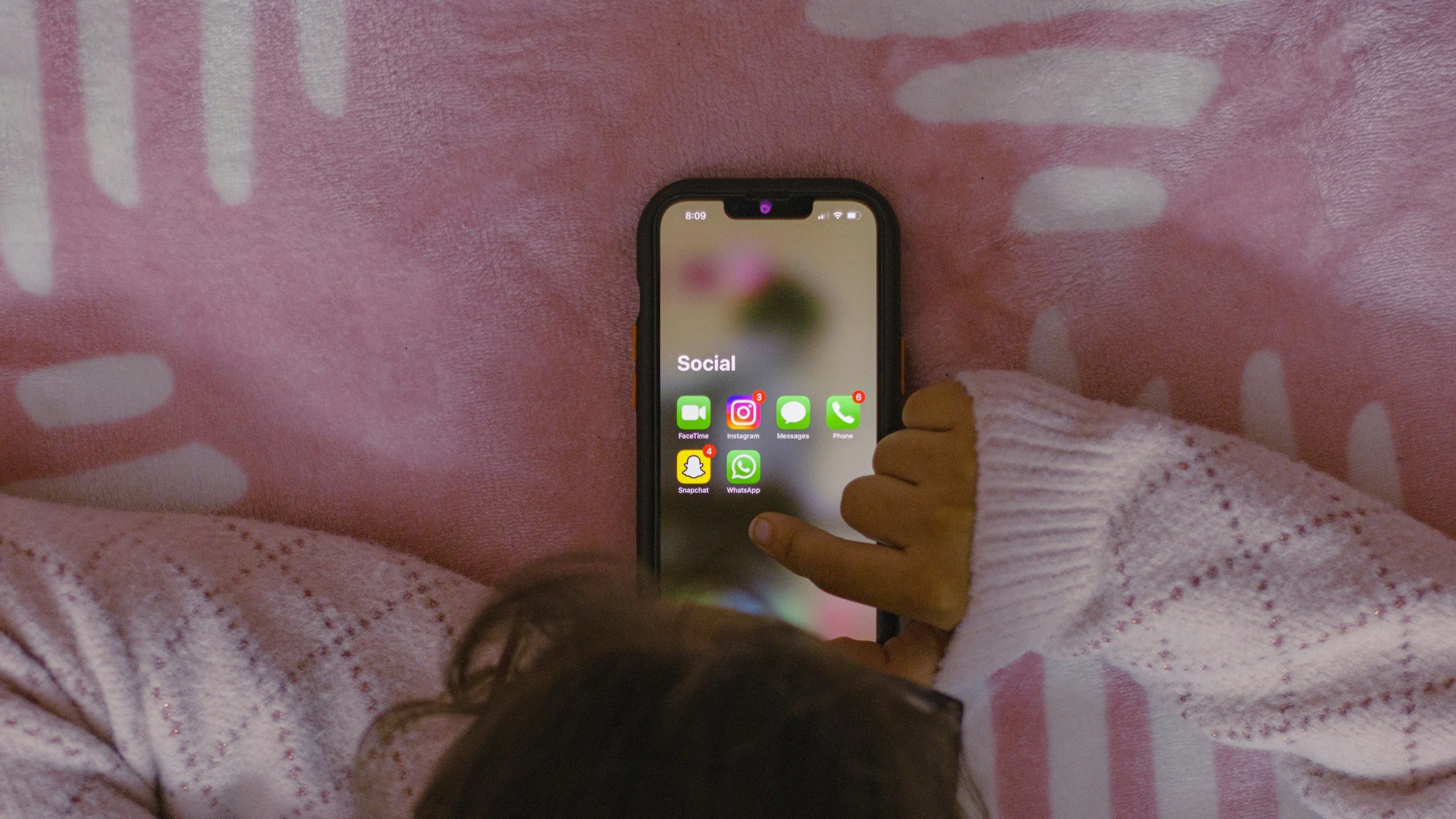
TikTok. Instagram. YouTube. Facebook.
Each app opens like a tiny door, promising distraction, promising escape, promising nothing at all.
You scroll. And scroll. And scroll.
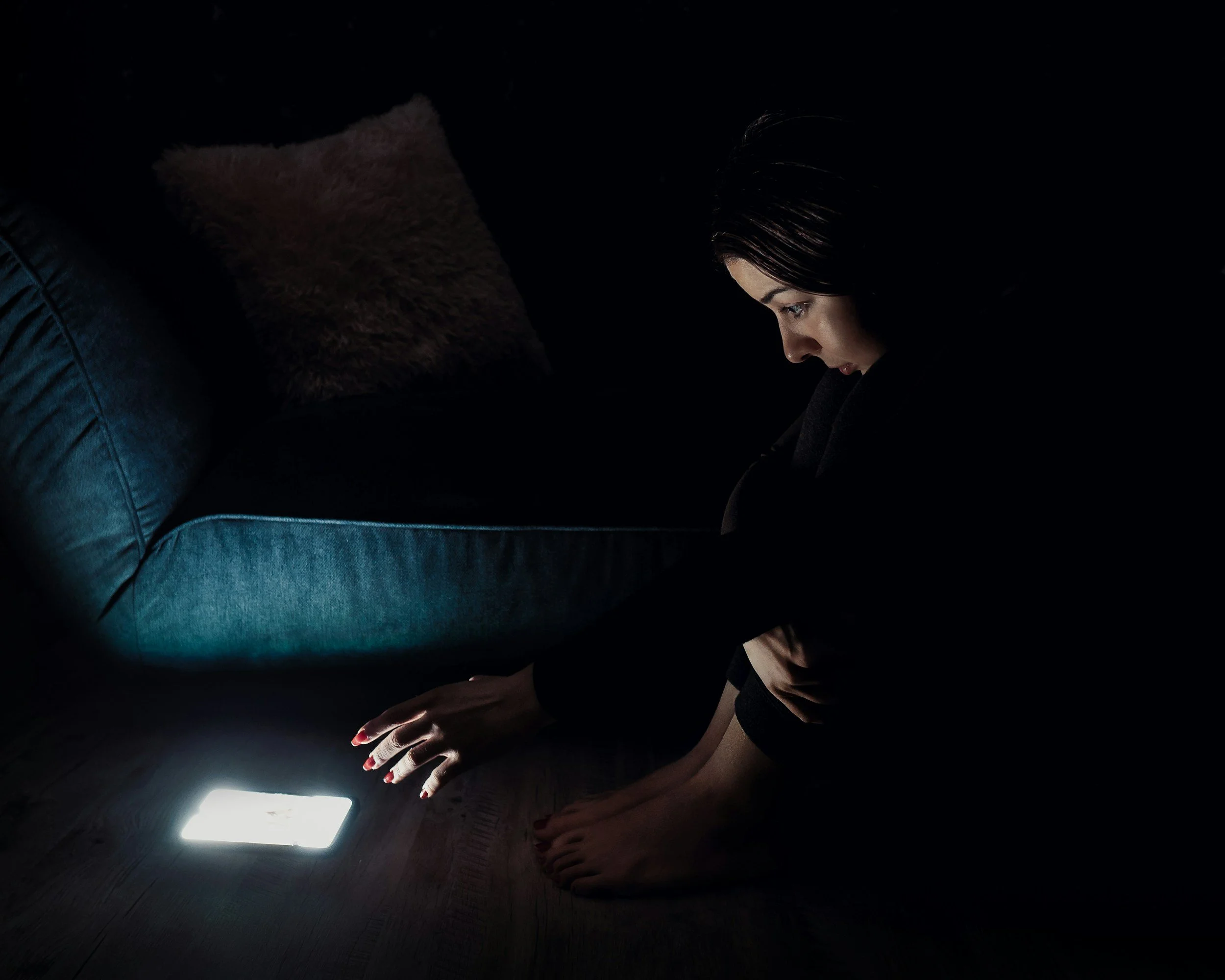
Time slides past you in a blur—three hours evaporate, held captive by Zuckerberg.
Our nervous systems are fried, vibrating with other people's thoughts, fears, and sales pitches.
Run Don’t Walk. Don’t miss this Deal. I can’t believe I got this on TikTok shop!!!
Ad after ad after ad.
Then THIS JUST IN: corrupt politicians are being corrupt again.
The cost-of-living crisis worsens.
BREAKING NEWS: the worst things you can imagine keep happening.
Another advert.
Your body tenses. Your jaw clenches. You feel more frazzled than before you opened your phone—yet you keep scrolling, because you’re too depleted to do anything else. It feels like a never-ending cycle. You’re exhausted so you consume media because you are too tired for anything else. But then the media exhausts you further.
Every time you go on social media, there’s someone talking about how we are cooked, we are doomed. A meme, a comment, a joke that’s not really a joke. And you start to believe it. You start to feel it in your bones. Because how could we not feel this way when we are being bombarded with all the misery in the world?
Because the truth is: the more powerless we feel, the more money social media makes, the more we doomscroll, the more we don’t have time for ourselves or our communities.
If everyone believes they have no autonomy—no agency over their future, their community, or even themselves—then we will keep consuming, keep shrinking, keep spending in order to feel better, keep surviving rather than truly living.
So, the question becomes:
How do we not live like this?
How do we step out of the doom-scrolling vortex?
How do we hold our sanity, our humanity, our hope in a world that feels like it’s burning at all edges?
How do we stay hopeful for the future while being bombarded with climate collapse headlines, political chaos, genocide and war, tragedies, and injustices that make the world feel unbearably fragile?
The answer (simple and sometimes overlooked) is this:
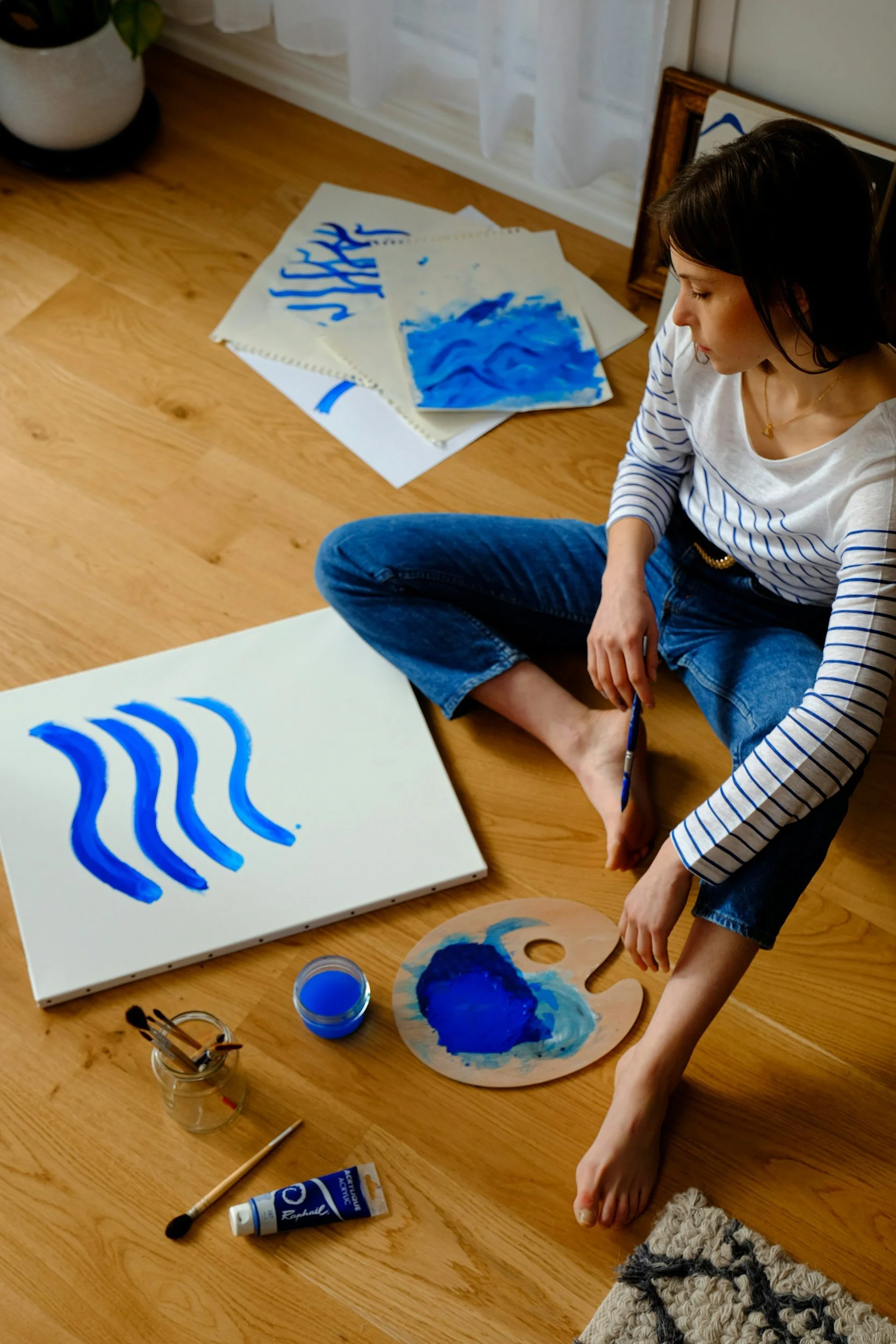
Create.
Create art.
Create music.
Create dance, poetry, stories, messes, moments.
Create anything and everything.
It doesn’t even need to be good art, it just needs to exist.
It may seem silly.
It may sound small.
But In the age of distraction and AI slop we need to focus on one thing: creating more than we consume.
Art is our connection to the world, it’s deeply ingrained within our humanity. Art is a part of our human survival.
Creation reconnects us to ourselves.
Consumption pulls us away.
You may ask “How will doing a watercolour painting or going to an art exhibition make me feel like the world isn’t on fire?”
According to Health in Mind (UK), just 20 minutes of creative activity (doodling, colouring, drawing) can lower stress, regardless of artistic skill. Creative activities also boosts self-esteem, helps with self-understanding, and promotes emotional wellbeing. Additionally, the NHS Confederation report on arts and health indicates that engaging with art can reduce anxiety, lower stress reactions (as measured by cortisol), and support better quality of life and self-confidence.
A recent study (King’s College London) showed that viewing original artwork in a gallery led to a 22% drop in cortisol, plus significant reductions in inflammatory markers (IL-6, TNF-alpha), which are associated with stress and chronic illness. (The Guardian)
I think often of the quote from Dan Savage.
“During the darkest days of the AIDS crisis, we buried our friends in the morning, protested in the afternoon, and we danced all night.”
To combine music, movement, and community during the darkest of times gives us the hope and resilience to keep moving forward. To fight for joy and to fight for life, dancing becomes an act of defiance. A way to cope with the pain while also celebrating being alive.
Start slow: one evening a week where you don’t consume media.
Or jump straight in—turn it all off for a while. See what happens when silence replaces the scroll.
Try to be intentional with social media. Become aware when and where you reach for your phone and question why that may be. Maybe try to keep something something creative with you that is just as easily accessible like crochet or a book that you can pick up even if just for a few moments. It doesn’t need to be a perfect process, but one of curiosity and questioning. If you are still getting sucked into your phone even when you don’t want to that’s okay. It was built to keep you reaching for it, and it’s not a failure if you pick it up when you don’t want to, it just means they did their jobs really well at making it addictive. Keep curious and keep trying to be intentional and it will get easier, and overall, be kind to yourself on this journey.
And we can try to curate our feeds to make them less overwhelming. It is absolutely great step to try to support our wellbeing. The internet can be a good place of community and things that support our wellbeing. We are able to see beautiful art and funny cat videos that make us laugh. The internet isn’t all good or all bad. But it’s the combination of good and bad that makes it addictive and toxic. The slot machine like scroll to the next video or post. What will it be? Will it be a beautiful painting or a musicians newest single, or will it be climate devastation. It’s the uncertainty that makes it hard to walk away from.
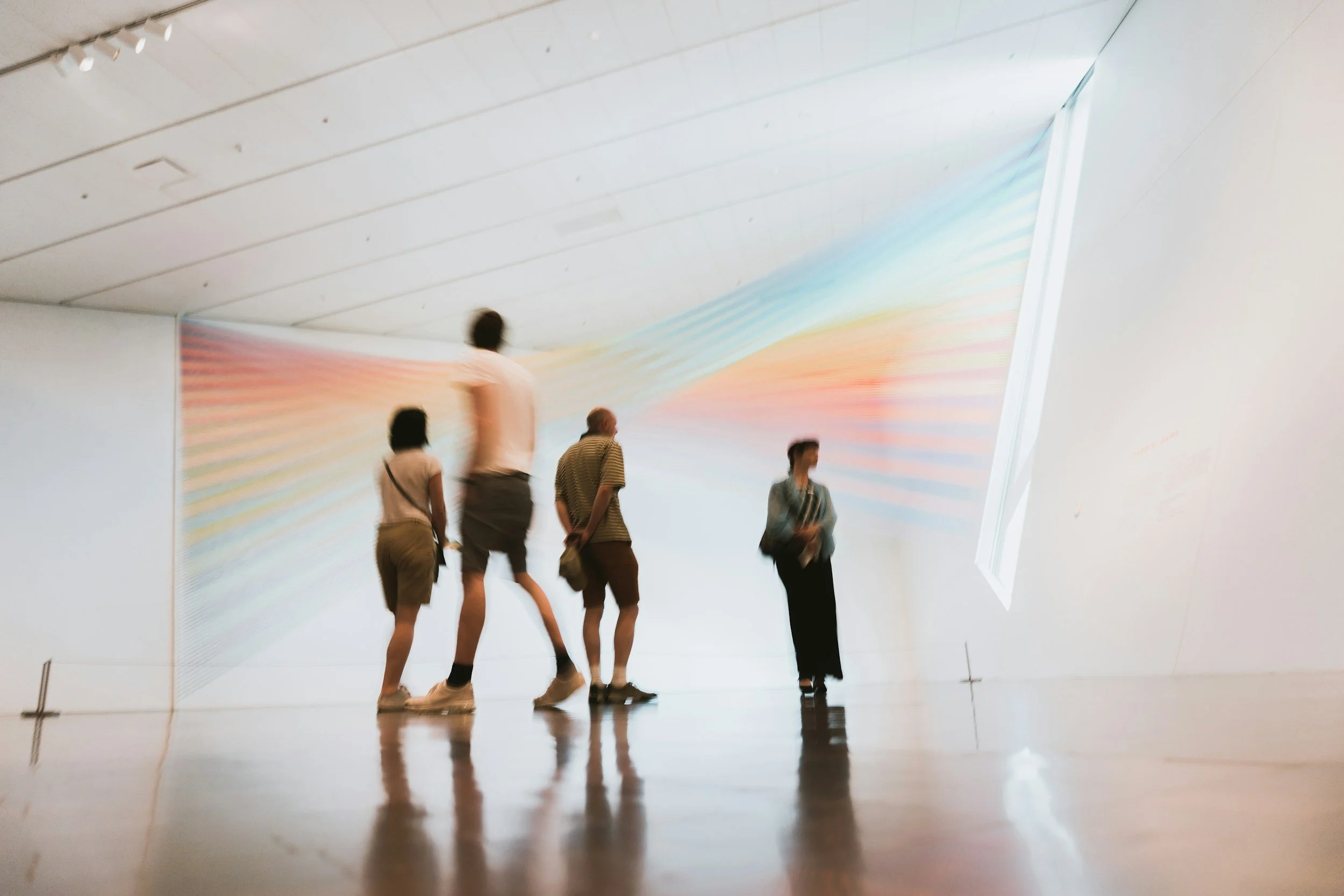
But let’s be honest, when was the last time you spent a few hours doom scrolling and felt better after, even if you only saw good things. Did you feel the same way the last time you viewed art in person whether it was at an exhibition or a gig?
Art is not optional. It is not a luxury.
It is one of the oldest survival tools we have.
It is not something we need to be good it just needs to be. Be playful. Be curious.
And if staying informed of world events is important to you sign up for creators mailing lists or substacks to stay up to date on news without being bombarded by the 24/7 news cycle in your pocket. It takes 10 minutes to stay informed of what’s going on in the world, anything beyond 10 minutes is frying your nervous system.
From the Substack article Art as A Necessity: Rethinking the Fundamentals of Human Survival, they write:
“Without art, there is no architecture, no fashion, no culinary tradition, no meaningful communication. In fact, without art, we wouldn’t even know how to communicate that food, clothing, and shelter are important.”
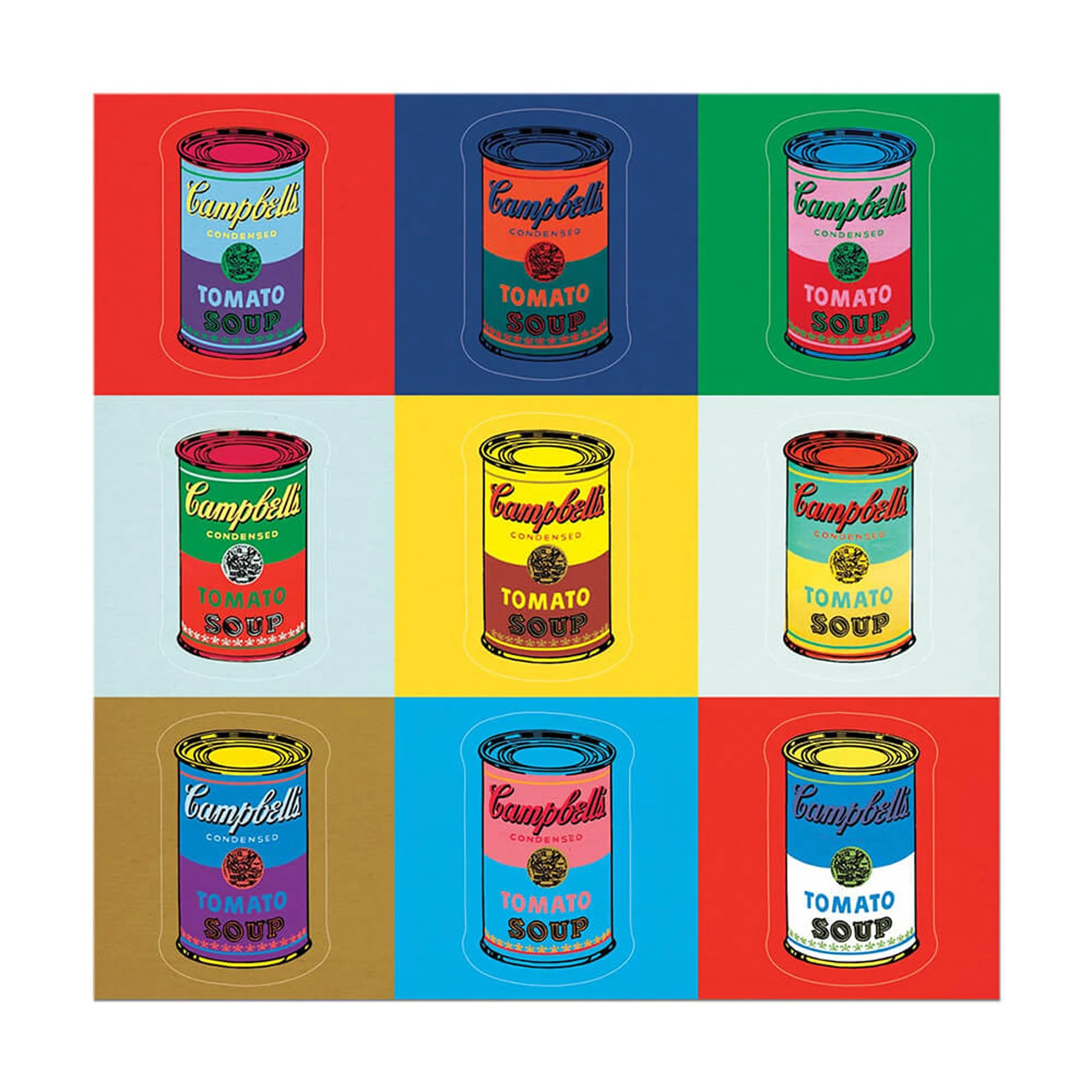
“Art is so embedded into the fabric of life that we no longer see it. It’s in the curves of a chair, the logo on a soup can, the story behind a song. But because we don’t always call it ‘art,’ we forget to recognize it as such.
Worse, we’ve been conditioned to see art as an extra—a luxury, an elective, an afterthought to the “real” work of survival.
But what is survival without meaning?”
(Also the whole article is amazing and I highly recommend it)
Art is the change from survival to expression. It is the tie to ourselves and our communities. Art is the root of almost everything that feels human.
How does making art help our mental health? Art doesn’t just express our emotions – it regulates them. Art gives shape to the things we cannot name. It slows our nervous system, grounds our bodies, anchors the mind, and nurtures imagination.
Right now, our imaginations are being co-opted by doom, by despair, by endless content that tells us the future is bleak and inevitable. When we’re overwhelmed, we lose our ability to dream. And if we can’t dream, how can we imagine anything better?
Art reopens that door.
With art, we can envision a future built on empathy, compassion, creativity—one that hasn’t been influenced by algorithm build to keep us addicted or dictated by fear. And remember if it can get worse, then it can also get better.
Art reminds us that we are still capable of beauty, of thought, of change.
Art reconnects us with our internal worlds, our bodies, and our communities.
And that means we are not powerless.
We are not cooked.
We are not doomed.
We are still here—and we can choose creation over consumption.
We can reclaim our energy, our attention, our time, our imagination, our hope.
And piece by piece, brushstroke by brushstroke, we can begin to imagine a world that feels worth living in again.
I write this as someone who is impacted by this on a personal level, but also on a professional level as an art psychotherapist who discusses this topic often. This is something so many of us are feeling collectively and I think it’s important to continue this conversation with ourselves, our friends, our family, and our communities. I hope you feel comforted knowing that you are not alone in feeling this way and feel better prepared or inspired to break away from the algorithm hooked on panic. If you are interested in art psychotherapy and are based in Nottingham, UK you can see my services here or if you want to learn more about art psychotherapy click here.
And remember above everything else. Be kind to yourself along this journey.
- Georgina
Bibliography:
The Art Districts. (n.d.) ‘Art as a necessity: rethinking the fundamentals of human survival’, The Art Districts Newsletter. Available at: https://theartdistricts.substack.com/p/art-as-a-necessity-rethinking-the (Accessed: 17 November 2025).
Davis, N. (2025) ‘Picture of health: going to art galleries can improve wellbeing, study reveals’, The Guardian, 28 October. Available at: https://www.theguardian.com/society/2025/oct/28/picture-of-health-going-to-art-galleries-can-improve-wellbeing-study-reveals (Accessed: 17 November 2025).
Health in Mind. (n.d.) The importance of arts to our wellbeing. Available at: https://health-in-mind.org.uk/resources/mental-health-at-the-fringe/the-importance-of-arts-to-our-wellbeing/ (Accessed: 17 November 2025).
NHS Confederation. (2018) Arts, health and wellbeing. Available at: https://www.nhsconfed.org/system/files/media/Arts-health-and-wellbeing_0.pdf (Accessed: 17 November 2025).
NHS Confederation. (2020) Engaging with the arts to improve health and wellbeing in social care settings. Available at: https://www.nhsconfed.org/system/files/media/Arts-and-health-wellbeing_4.pdf (Accessed: 17 November 2025).